Math Mammoth in Cathy Duffy's 101 Top Picks!

100 Top Picks for Homeschool CurriculumYou might have heard of this popular homeschool book, 100 Top Picks for Homeschool Curriculum by Cathy Duffy. Math Mammoth has been included as one of the top picks for the newest edition of this book, just coming out!

I feel honored about it... years ago, when I started working with the books, I never DREAMED it would come to this!

If you're interested in the new edition of book, Homeschool Buyers Co-op has a group buy for its digital version, ending at the end of this month.

And, if you subscribe to Cathy's newsletter at CathyDuffyReviews.com, you get a $3 discount coupon code for the printed version, I understood.

You can read her review of Math Mammoth in the book, of course, but also on her website as well:
www.cathyduffyreviews.com/math/Math-Mammoth.htm

The Fibonacci numbers and converting miles to kilometers

Courtesy of Mararie
This is an INTERESTING application of Fibonacci numbers!

Fibonacci numbers are the sequence
1, 1, 2, 3, 5, 8, 13, 21, 34, 55, 89, and so on. (Add two numbers in the sequence to get the next one.)

Take two neighboring numbers in the sequence, such as 5 and 8. Turns out, 5 miles is approximately 8 km.  Take 34 and 55:  34 miles is about 55 km.

If your number is not in the sequence, write it as a sum of numbers that are:

Convert 10 miles into kilometers. 10 = 5 + 5, and 5 miles is about 8 km. So, 10 miles is about 16 km.

OR

Convert 25 kilometers into miles. 25 = 21 + 2 + 2.

21 km = 13 miles (about)
2 km = 1 mile (about)


25 km = about 13 + 1 + 1 miles = about 15 miles.

More details here: Adventures in Fibonacci Numbers

The reason has to do with the fact that the conversion factor, (0.621371192 mi/km) is pretty close to the ratio to which sequential Fibonacci numbers converge (0.61803).

To Listen, To Sense, To See


I'm going to India in a week and a half.


Anxious.

As much as I want to prepare myself in some way, I can't.  I've checked out books about India from the library and returned them unread.  I've briefly reviewed Hinduism, but I took a whole course in college.  And, honestly, I'm not really sure tha I should reschool myself in it for this trip.   My time has actually been spent reacquainting myself with the God that I already know. In some sense I'm setting myself up for an experience that will simply happen to me, like jumping in a lake and emerging drenched in an element that I don't normally exist in.  Floating in it.  Letting it carry me.

Paharganj
I have tried to cram 11 weeks of summer (and maybe a couple years of life) into about 6.  I've gone room by room, closet by closet, putting things in order.  All the appointments that needed to me made (well-child, dentist, travel vaccines, eye exam, the specialist I've been putting off) have been made and just about completed.  Lesson plans have been created up through Thanksgiving.  Family photo albums done to a point.  Women's retreat planned and organized for when I return.  HHacked bank account dealt with.  We've even met with a lawyer to put our living trust, will and powers of attorney together.   I'm definitely getting things done, but I'm not really present in them.

I've spent the whole summer making things happen.  In some ways it has actually been the most intentional time of my life.  Looking deeply at my children when they talk to me. Calling my son when he's home alone.  Taking them places for quality time.  Letting go of other normal summer stuff so I can just be with them playing catch, watching them play, spurring them on, swimming at the pool. When I'm with them, I'm fully present and I know it.

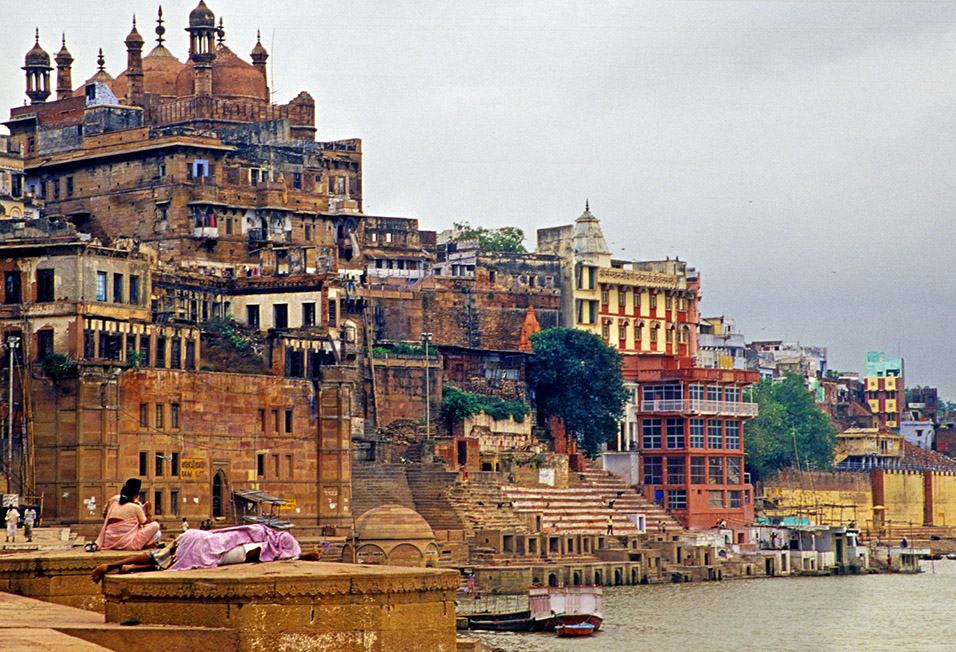
india/varanasi_rolling_beediAm I afraid?  Am I putting my affairs in order as a result of that fear?  Am I drinking in my kids because of it?  Or am I anticipating that life will be different when I return to such an extent that I'm taking note of life as it is now?  Is all my preparation so that I can re-enter with a new set of eyes?  I can begin again with no loose ends to drag me back to what was.  I can simply jump off and move forward. 

Maybe a little of both.

Pray for us as we go and wrestle alongside an indigenous pastor who doesn't quite grasp a God of grace.  We'll pray with those wives who need love for the churches their husbands are leading.  We'll come face-to-face with sex trafficking in action; smell the slum; intervene for the sick.

And we'll also see the restoration that is already being done through charitable works, engineering and church planting... to see what God is doing through his church to end poverty.

Please pray for us to have eyes to see this part of the world as God sees it, to purposefully associate with a culture opposite from our own to make connections and exhibit grace.

And to return made new and fully present.

Math Mammoth Grade 3 now aligned to the Common Core standards

Math Mammoth Grade 3 is now aligned to the Common Core. In this post I try to outline what is same and what is different about this edition compared to the previous one.

cover for Math Mammoth Grade 3-A Complete WorktextWhat is same?

-  The focus on single-digit multiplication and division is the same. I did add more varied word problems to these two sections, and other little 'enhancements' as I edited the lessons, but no major changes here.

- Also, much of the addition,  subtraction, and place value topics are the same. There are some slight differences, yes, but not major ones.

- Time and money sections are the same.

cover for Math Mammoth Grade 3-B Complete WorktextWhat is different?

- The geometry chapter has been pretty much redone. Now, it concentrates on the concepts of area and perimeter (according to Common Core standards). Before, I did have one lesson on area, but also other concepts, such as right angles and parallel lines. Those will be moved to 4th grade.

- In measuring, I have removed most of the content that dealt with conversions between the measuring units, as that is a topic for  4th grade in the standards. I did leave some content and easy exercises about it, though, as I feel 3rd graders are able to do such. I also reorganized some of the material here and added new measuring activities.

- In fractions, I added the topics of fractions on a number line, equivalent fractions, and comparing fractions, and removed the topic of adding and subtracting like fractions.

- The topic of decimal number has been taken off from this grade.


Formative Play


God in the Yard, Week 5

For the summer, we've declared Fridays to be Outdoor Day.   All this boy energy must have an outlet.  And all this preoccupation on my part must be balanced with the here and now.  I am going to India soon, but I'm not gone yet.  My sons ought to feel my presence.

And so, on Fridays we play with intention out in creation.  The lakeshore beach.  The community pool.  A little hike.  A little bike ride.  This photo was in a bicycle built for four.  J is in the driver's seat.  S's feet are dangling, along for the ride.

It's amazing how difficult this day of play was.  These vehicles are not easy to maneuver. Sometimes, B got out and pushed.  Sometimes we stopped and switched drivers.  We all had to do it together.  And we enjoyed the adventure.

I've been trained, perhaps trained myself, to think that growth happens more through suffering than through play.  I think this is based on a persistent human desire to explain suffering.  If the pain is useful, then I can endure it.  Consumer that I am, at least there's something in it for me.  And that is true in at least some of it's intents and purposes.


It has never occurred to me to think of play as a growth vehicle.  It is silliness, juvenile, appropriate only occasionally.  That's how I think.  I do, however, enjoy watching my children engage in it...immensely.  And it dawned on me this week why that is:  because they learn when they play.  Their play is how they grow.  And watching them grow is actually quite amazing.

In his or her first five years of life we attribute a child's ability to grow and develop to his or her freedom in playtime.  We bemoan the child who has never been camping, played ball, pretended to be a different character. We sense there is something missing from their experiences that won't give them enough momentum to push into life's next experiences.  This isn't an unsubstantiated theory.

But, apparently, this is not so for adults.  Why not adults?  Is there a switch that activates at 10 years old (the age when one son declared he was too old for playgrounds and superhero swim shorts and another son has poo-pooed VBS) in which the path of growth moves from play to work?  Isn't it another both/and?  We seem to think we ought to take away play and replace it with work and pain.  But I think we're missing half the cycle.  Or at least I'm beginning to think it.


When children engage in imaginative play they push the work of understanding the world more deeply into them. Whether playing house or Jedi knight, they are working out the truths of life in safe and controlled circumstances.   When J & B were younger I would intentionally stop our school day right after the days' lesson and give them some time to play because I knew that with the fresh imprint of the Revolutionary War or dinosaurs or flight they would take the Legos or Rescue Heroes out and incorporate scenarios in their play from what we had just talked about.  And the lessons grew solidly in their minds.  Play was their practice test.

In play the purpose of our ways is made clear.  We reveal our true selves when we allow our ego to be shoved aside and our curiosity to win.  It grows us.  So, why don't we value play?  Why don't we open ourselves up to less productive, more imaginative 'work?'  I think I've discovered something new to add to the summer.   Outdoor Day is a great first step, but my attitude toward it now might be freer, lighter and healthier as we head out to engage the world and let its imprint set deeply upon us.

Good Gifts


God in the Yard: Week Four

Sometimes the thoughts take longer to come.  This week there was a question that lingered in the air with no place to land.  What is celebration?  Under this Crabapple tree, celebration means the apples haven't started to fall.  Yet.  Celebration is a party.  An invitation to others.  The release of a tension.  The elements of celebration:  remembrance, extravagance, familiarity.  What have I celebrated?  I made a short list.  What would I celebrate next?  I came up empty.  

Nothing forseeable to celebrate.  It can't be.  What crowds it out?  Ungratefulness. Entitlement.  Or perhaps humility and trust.  It could be either way.  Was I unwilling or just unknowing?

A friend stopped by, returned an item loaned, shared her current hopes and fears.  Good choices are all around her plate, but which one to partake of?  I said, "Take the path you want."  I know that sometimes there are only good choices, not always one holy and one repugnant to God.  He can give a selection, just gives it, and any one we choose we simply put our fingers around it and smile.  And he puts his arms around us and says, "I'm so glad you like it. Let's enjoy it together."

He has done this for me... given me what my heart longed for.  Given the gifts of answered prayer.  In this season, this home in Denver, he's redeemed an old burdensome job, given purpose in ministry, provided a "boundary of dwelling," helped my son (helped me with him), provided for an anniversary dream, gave me a community of mothers different from me, made our finances sure, provided a husband's love of his job, his wife, his children, took away the fear for the future.  I began to wonder even early on, "Will all things be answered here?  All the things I prayed in that borrowed bedroom with heavy hearts and sighs?  Will he bring them all to the table and settle them?"  He has done that one-by-one.

He is in the habit of giving, loves to give good gifts.  And more are coming.
More are coming!

I will celebrate when the prayers I pray come to fruition.  There are more redemptions. Why shouldn't there be?  He is making all things new.
I made a list.
I await the chance to celebrate.

First Chapter Books


As a parent I'm no different than any other; I have a list of  things that I can't wait to do with my kids.  The hardest part is waiting for them to be old enough to play catch, take hiking, or go to the theater.  Reading chapter books aloud to them was at the top of my list.  We do read alouds during our school year every day, but those selections have a specific purpose, and they aren't always designed with my youngest in mind. 

The Phantom TollboothThe Boxcar Children Bookshelf (The Boxcar Children Mysteries, Books 1-12)Their first personal read-alouds usually begin around the time they are five and they have some connection with my own childhood.  J's first read aloud was The Boxcar Children, a book I loved so much that I convinced my best friend to check it out from the library on my card.  She promptly lost it and I paid the fine on her behalf secretly hoping she was really just keeping it because she loved it as much as I did.  B's first read-aloud selections were a little different because he shared a room with his older brother so bedtime stories were for both of them.  But I chose The Phantom Tollbooth with my math-minded, artistic B in mind, remembering when a teacher read it aloud to our class while we made thickly colored wax crayon drawings of the story.  


Stuart LittleNow it is summer.  And as I snuggle in with five-year-old S before bed we get to read something together that's just for pure fun.  The first one I picked for the two of us was Stuart Little by E. B. White.  I remember getting the set of books by E. B. White when I was a child and reading them all at least twice.  (My oldest absconded with my set and did the same thing.  Only the tattered, coverless pages are left.)  We both enjoyed Stuart Little though I wonder what he thought about the ending since the story never really concludes.  But then again, maybe it's good for him to know that sometimes our hardest searches will come up empty and what we learn to live with is hope.

Rabbit Hill (Puffin Modern Classics)The second choice is Rabbit Hill by Robert Lawson.  We are only one chapter in, having broken it into two sittings, and the vocabulary is beyond him.  Sadly, I take on the role of dictionary during much of our reading, but most of the time I just let the words hover over his head and see if he shows an interest in knowing them.  I know it's ideal to read above their level, but this one might be just a bit too high.
Old Mother West Wind
If we can move through this one quickly enough, I'd like to introduce him to Thornton Burgess' animal stories.  I found an old edition at a library sale years ago and those stories are delightful.  And after that I want him to hear...


Some online measuring games

Recently I was updating the list of measuring-related online games & resources at my site. I found these resources (new to me) and thought you might enjoy them a:

The Ruler Game
Choose between whole inches, half-inches, quarters, eighths, or sixteenth parts of an inch to measure. Click on the given measurement on a ruler. Timed or not timed versions available.
www.rickyspears.com/rulergame


Sal's Sub Shop
Customers order subs, and you need to cut them to the given measurements - sometimes in metric units, sometimes in inches.
www.mrnussbaum.com/sal.htm

Reading Scales
You can illustrate a variety of measuring devices, such as scales, measuring cup, thermometer, and speedometer, and how to read them. Generate examples using different scales on different devices at the press of a button.
www.teacherled.com/2008/01/28/reading-scales


Measures
An online activity about metric measuring units and how to read scales, measuring cup, and a ruler. Uses British spelling.
www.bgfl.org/bgfl/custom/resources_ftp/client_ftp/ks2/maths/measures

I have a longer list here: Measuring - list of online games and tutorials.

Of course, with measuring, life and experience is the best teacher, not computer games. So encourage your child/students to play with measuring cups, scales, and rulers so they will learn to use them.

Continuity


Most mornings before the children rise, I have been able to be outside in the yard.  Sitting under the Crabapple tree, feeling the acceptance of nature.  I woke up yesterday, shunned the chilly morning and chose the couch.  Book and journal and pen I began.  The crowding started immediately:  stale, gritty, inanimate, lifeless surroundings.  The room did not speak.  Grabbing my sweatshirts, I quickly rejoined the reality that calls.

The moment I opened the door I knew it was the place of God. Surely nature, too, has omnipresence.  The breeze was blowing already.  The leaves were twittering and whispering.  The birds were mid-song.  The green healing from the hail was in process.  The Coreopsis bloomed without me.  I wasn't the one to create it. I just joined it, wanting to be a part of its story. 

God too is always at work whether we're aware, whether we trust, whether we understand or not.  However, days and weeks go by when I do not enter his reality.  Sadly the inanimate rules my mind and heart. It's not a leaving that I have to do, but an entering. Ever present, ever powerful, ever loving, ever purposeful. Whether or not we choose to take notice of him, he is always there being who he is and we can join his story.  

Opening my book I read this from A.W. Tozer.  "Always a living person is present, speaking, pleading, loving, working and manifesting himself whenever and wherever his people have the receptivity necessary to receive the manifestation."  This was my firsthand experience.  Nature was the object lesson.  

Earlier in the week I had contemplated what it is that nature communicates that words cannot.  Perseverance.  The true-grit nature of it.  The never-give-up-doing-what-is-right aspect.  We humans have a stopping point.  We push through a little of the rough, maybe even a hail-like stoning or a wind.  But we give in when we look around and listen to outside voices.  When we think a disaster has won, we let it. Quit. Move.

Nature stays put. And takes the hit and re-creates the beauty over and over.  The tender leaves might wait a year to return from the hail.  The tree takes on a new form and purpose after the fire.  The bird will learn to fly.  The tree will produce seed though so many thousands were left unfurrowed for naught last year.  The bird will sing when none answer.  

To be consistent in my one thing is to take that image of God and push it out of the soil, expose it to all that is nourishing and let it continually be both the inner and outer covering.  God is continuous. Nature follows suit. I want to be like my maker.  


Mathematics and scheduling of buses


Image courtesy of welshmackem


I found this article via Math Teachers at Play carnival... it talks about a new method of scheduling buses, which uses mathematics, namely Markov Chains.

I'm not personally familiar with Markov chains, but whenever mathematics solves a problem in real life, I find it fascinating!

The mathematical method "evens out" the headway (the spacing between buses) by holding each bus at the start of the route a specified amount of time. That avoids "bus bunching", and it also makes it where the bus drivers don't need to adhere to any schedule--reducing their stress.

The researcher John Bartholdi says

The trick is to hold the bus for an adjustable amount of time at one stop. We simply control how long they wait at the end of the route, and then we tell them, ‘drive comfortable with the traffic to the other end. Don’t worry about where you are. Just flow with the traffic.’

Read more: Markov Chains avoid buses arriving in threes
Sounds cool!

Read it Again

My summer reading theme this year is "Re-Reads."  Last year I caught up with various sub-cultures a bit as I read through some of the most influential books from the past 10 years.  This year, I'm catching up with my former self and standing her back-to-back with my present self, measuring the distance between.  I'm re-reading those books that had significant influence on me, maybe left me breathless, and asking the question, "Does this book still hold its place?"

These books are attached to moments and experiences.  When I read them I endured a hard/interesting season of life, pondered a question, sought out a perspective.  As I re-read the books, I'm looking back to where I was the first time, seeing where I've changed, how life took turns I wasn't expecting.

The list is significant.  But the moments re-lived may be more overwhelming.

East of Eden
East of Eden
To begin I've picked up the book that began my love of Steinbeck, East of Eden.  I took it along on a roadtrip with my husband up California's Highway 101 through Steinbeck country. Three years into marriage.  One church down.  Seminary educations in full swing. Childless and idealistic.  This story gave me a dose of reality I couldn't relate to and yet couldn't shake.  Have I seen and understood more of this reality in the time in between?  And just when I had my Steinbeck collection all in matching orange spines, why did Penguin go and change the design?
The Pursuit of God
The Pursuit of God

Secondarily, I've re-opened The Pursuit of God by A.W. Tozer on my Kindle.  This is one that I read during our impossible journey years ago.  When we were packing up everything to put in storage for an undetermined amount of time, I kept this book out knowing I needed what it had for me.  While waiting, praying, crying out to be heard, hoping, sighing, living without a home, without a job, or a purpose  I'd put our two kids to bed in our borrowed rooms at my parents house and go out on the arbor swing and just let Tozer teach and calm my anxieties.  Our current season is the opposite of that one.  Will Tozer still give clarity toward a fuzzy future?


The rest of the list:
Walking on Water by Madeleine L'Engle
Ordering Your Private World by Gordon MacDonald
The Count of Monte Cristo by Alexandre Dumas
Surprised by Hope by N.T. Wright
Men and Women in the Church by Sarah Sumner
Working the Angles by Eugene Peterson
Gift from the Sea by Ann Morrow Lindbergh
Night by Elie Wiesel
Entering His Presence by Don McMinn
The Skilled Helper by Gerard Egan
Native Son by Richard Wright
Sacred Companions by David Benner
Bittersweet by Shauna Niequist


More about Area - free worksheet for grade 3

Here's a little sample of what is keeping me so busy right now - third grade math, aligning things to the Common Core standards.

This is a complete lesson (4 pages) about area for grade 3 math. It's not the initial lesson - it assumes the student already knows how to find the area of a rectangle. (Sorry - there is no answer key at this time; it hasn't been made yet!)


The lesson (worksheets) is specifically about these two standards:

3.MD

7.c. Use tiling to show in a concrete case that the area of a rectangle with whole-number side lengths a and b + c is the sum of a × b and a × c. Use area models to represent the distributive property in mathematical reasoning.

 d. Recognize area as additive. Find areas of rectilinear figures by decomposing them into non-overlapping rectangles and adding the areas of the non-overlapping parts, applying this technique to solve real world problems.

The Effort of Growing


God in the Yard: Week Two
"Spiritual life and growth is complicated by the question of whose job it is to keep our lives from falling into nothing." -- L.L. Barkat
This week, the Salvia were engorged with blooms, the Columbine were coming to their grand finale, the Jack Frost was saying a sweet good-bye with his dainty blue flowers, the Hostas were just emerging with force and fullness.  And this week we had a hailstorm.

There was utter helplessness in my chest that night. All the beauty that I had partnered with the plants to create was decimated.  Cleared away.  I could do nothing to save them.  I could only hope they would endure into the next season.  As I deadheaded the beds last night I found myself encouraging them onward.  You don't have to fall into nothing.  There's still life left in you.  Keep trying to grow.   I'll help.

Around me, lives are falling into nothing.  Friends who once had strength are currently powerless.  Those in a place of influence are finding that fewer and fewer are paying attention anymore.  Among them is a sense of general ineffect.  And though their great griefs tug at me, in some sense it reassures me that everything is as it should be.

It's the ebb and flow.  One cannot be hot all the time, though we fool ourselves into thinking it's possible.  My experience says that the ebbs are what's real and the flows are really a sort of appearance.  What's for certain is the rhythm.  When we are full the thing that assuredly comes next is a great emptying.

If that's true, then is there anything that can be done to keep my life from falling into nothing?  And if there is, then does that effort fall to me or to God?

Years ago, the depths of my Calvinism would have pronounced, "Whatever will be, will be."  Through the miracle of wandering homelessness I saw that in the end there's nothing I can really do.  No one is truly self-made.  In recent years,however I felt more of that effort falling to me, a sort of gift from God who says, "In this season you can take some of the reigns, but be wary of snakes in the way of the horse."  I recognize the partnership we keep with God much more readily, and as a result my part has risen from nothing to actual service.  And still when we fly he keeps us aloft; when we fall he inclines to rescue us.

I believe it's my job to preserve my soul because there are not six degrees of separation that will do it on my behalf.  Not my identity. Not my husband. Not my reputation -- my previous story.  What grows me is my service, my following a prompting, my disciplines, my open heart, my seeking... and my falling.  And yet, I also believe it is God's job to preserve my soul because the Spirit of God has been given that role to move, to prompt, to focus.  It is a partnership of sacrifice and submission, not primo and secundo, but as in most things of love, it is both/and.

I do not know how my garden will fare this summer.  Once the leaves are gone, and they are not all gone, how can the plant produce its food?  But I believe that the earth will replenish; that it is far more enduring than I.  Everything is as it should be.  And everything will be changed.

Sitting Under Trees


Week One: God in the Yard.

A small space I tend to overlook is the foot of a tree.  I remember sitting under trees during rain showers, swinging from their branches and scraping the dirt away from their roots with my shoes, buring treasures at the base of their trunks... when I was a child.  I remember the different feel of the bark of Aspens, Maples, Oaks. I loved being next to something that was bigger than myself knowing it wasn't out to surprise me.  Once I nailed a sign to a tree and after a while the tree began to ooze its blood through the hole and it made me sad.  My botanist father sighed.

Sitting under trees is an activity left for children.  They don't have a list of pressing things.  They seek rest when they need it.  They follow whims and imagination.  When we encountered this tree last week on a hike through Kasha-Katuwe my children instantly ran to climb the roots.  I stood back to take the picture.

We have three large trees in our yard; a Silver Maple, a Colorado Blue Spruce and an Austrian Pine.  I never sit under them.  I walk around them with wariness like I'm an intruder.  I know they leave hands sticky, let insects move up and down their barked highways, drop things from their branches.  I'm concerned that they too thoroughly shade my garden and might kill our new grass.  I avoid the trees.

Last Friday, I sat under a tree for the first time in years.  It was out of necessity; the grass all around was wet but this young Cottonwood had a broad, dry root protruding from the soil at its base.  I leaned against the bark, velcro to my shirt, and watched my children play at their games.  My freckled skin needed shade for that hour and the heart-shaped leaves provided it.  Having my journal handy I pulled it out and wrote a few thoughts.  An adult friend walking past, taking the children out to the field, whistfully commented that she wished she could be where I was.  I felt childish; perhaps I should have been working too.

In order to grow I feel like I need permission.  To grow as a counselor -- something I've become by default -- I need to feel like I'm allowed to push the one I'm helping.  To grow as a leader I need other leaders to say, "Come on.  We think your growth is a good idea.  Keep trying."  To grow as a teacher I need permission from the world to continue to follow my gut for my own kids.  To grow as a writer I need permission -- maybe just from myself -- to set aside time to write.  To grow as a wife I need to feel like what I'm doing is what he needs me to do.  To grow as a Christian I need permission to grow on my own sometimes without taking a group along with me.

Cottonwoods don't seem to need any permission to grow.  If they happen to park their seed by the water and they have enough space they'll continually grow.  And they don't just do it adequately.  They pile on gigantic branches, gain heights of  nearly 100 feet and are considered majestic and magnificent.  They spend their 70 years thirstily sucking the water from the ground and continuing to do what they were made to do.  There is much to learn from their consistency and persistence.

This summer, I'll practice sitting under trees.  I'll fail sometimes. I'll miss a day.  I'll be misunderstood.  I'll fear that, like Lent, I'll miss the point and the practice will not produce a purpose.  It will be easy for others to label me as "odd".  But something is there to be learned and enjoyed.  I'm not a child anymore.  Here we go.

Cultivate these things. Immerse yourself in them. The people will all see you mature right before their eyes! Keep a firm grasp on both your character and your teaching. Don't be diverted. Just keep at it.  (1 Timothy 4: 15-16)

Right Up To The End

J is front row on the left at his eighth grade continuation ceremony.
My oldest son is in a small charter school.  He was home educated through 6th grade and we had various reasons for making that switch when he entered 7th last year.  This May, he graduated from eighth grade.  I think academically he accomplished some great benchmarks this year.  His teachers challenged him and enjoyed him.  However, his last week of school consisted of watching The Lord of the Rings (in his teacher's defense they had just finished reading and writing essays on the Hobbit), ultimate Frisbee, yearbook distribution, locker clean-out, random school-specific standardized testing, an awards ceremony, continuation ceremony, a day at an amusement park and a school bbq.

S's Kindergarten graduation from his once a week Options class.  S is in the plaid shirt.
My other two sons continue to be home educated.  B finished 4th grade and S finished Kindergarten.  Their last week of school was nothing like their older brother's.  S's final task was to daily read through his last four lessons in Teach Your Child to Read in 100 Easy Lessons.  We played some math card games and he participated in some of what his brother was doing too.  We were covering the Revolutionary War so B was typing up a paragraph on Washington as the first President, creating a book jacket book report on Johnny Tremain that we had read aloud, trying to at least make his over-ambitious rag-rug until a potholder, mapping out major war battles and watching a video about Yorktown.  In addition he continued to do some fun multiplication drills online, finished reading through the book of Exodus with me, and reviewed about a dozen spelling rules.  On our last day, after he'd finished up all of the above, we did our traditional oral review quiz that happened to take over an hour.  Then we proceeded to plant the front garden and map out our family road trip.  The learning never ends.

To say their last weeks were decidedly different is a bit of an understatement.  But I don't have final grading to get done like J's teachers do and B&S and I get to intersperse slacker fun activities through the year rather than cram them all into the last week.  Our last week is always one of productivity and pushing through to tie-up loose ends and wrap-up notebooks.  And our last week is never easy.  When we are a week away from being done for the year we start salivating for the outdoors, taking our work upstairs near the windows or outside on the deck.  We linger over lunch because the sandbox is such a nice place to finish the meal with a Popsicle.  We have to push ourselves back inside because the garden seedlings pushing through the earth are too distracting and steal our focus.  But we make the academics happen all the way to the end.

It's exhausting.  But when that final review is done and the notebooks are complete we heave a sigh of relief.

And then we hop in the car for a roadtrip and listen to Adventures in Odyssey tell tales of early America, visit a few museums of American history, hike through areas of geological peculiarity... I just might count vacation as school days for next year.

Homeschool domination infographic

I realize these ideas are not new to us homeschoolers... but someone has put together a nice looking infographic about how much better homeschoolers fare than their public school counterparts. So, maybe you will enjoy it.


Homeschool Domination
Created by: CollegeAtHome.com

Why am I aligning Math Mammoth to Common Core Standards

Someone recently was wondering if perhaps aligning Math Mammoth curriculum to Common Core standards wasn't a good idea, or at least wasn't going to help them any, because they have found value in curricula outside of American ones.

So why am I doing that?

I have known of Common Core standards for a few years, but in December 2011 I noticed that nearly all states were or are going to implement them. So, they are in essence providing a framework for a national curriculum in mathematics.

So, I decided to consider them, and to take a closer look at the standards. And I realized that Common Core standards aren't that "bad." They are NOT like most state standards have been, "inch deep and mile wide," with tons of topics per grade.

These are "core" standards, meaning there aren't a huge amount of them per grade. So it's a BIG improvement over many of the states' standards.


I also noticed that some of the "core" standards were already in place in Math Mammoth, such as a focus on single-digit multiplication in third grade, or multi-digit multiplication in 4th, or fractions in 5th.


I liked the fact that the standards explicitly mentioned some mental math!

Also, I am not fundamentally changing the teaching approach or style in Math Mammoth. Aligning to the Common core is more a question of reorganizing topics, moving some topics to a different grade, than anything else.

Yes, I've added a few little things they require such as measuring how much longer one thing is than another, or problems with unknowns shown with shapes, or asking children to divide a shape into quarters.  But it is not affecting the development of major concepts.

At the same time, I have also revised many of the lessons and made them better -- this is happening regardless of the standards. It's just when I see my earlier work, I find ways to improve it.

I hope this helps!

Math Mammoth May sale!

A traditional sale for the end of the school year... From May 20, 2012, till June 3, get 20% off of all Math Mammoth downloads and CDs at Kagi store.

Use the coupon code MAYSALE.

You can go to MathMammoth.com first, then find the links to Kagi's order pages. OR, use these direct links:

Enjoy!
Maria Miller


--

Math word (story) problems

Have you ever used this neat way of teaching math word problems to elementary grade students? Let them be like stories, and let the child create some too!

Denise explores this idea in her recent post: Tell Me a (Math) Story

Worth checking out!

Following the Call

I'm going to take a cue from my reading.  It's time to be done indoors. The outside is calling me.  I'm not able to read them all at once, but these are the reads that are vying for my attention.
Pilgrim at Tinker Creek (Harper Perennial Modern Classics)
Pilgrim at Tinker Creek
God in the Yard:  spiritual practice for the rest of us begins today as my summer practice.  I'm going to combine the spiritual practice with blogging practice  posting my reflections here.  If you're working through this book too (I've invited several friends), leave me a link to your own blog posts and we'll have a nice little virtual group.  

I normally lead a book group at the park in the summer.  This summer I knew I needed to say, "no," to that.  I'm long enough into life to know that I need to pay attention to my hesitations.  However, I realize that the 'being outside' element of that was probably very nourishing.  This book will get me out, on the grass, in the Columbines, fingers to earth.


Pilgrim at Tinker Creek has been on my nightstand for several months, a gift from my aunt who buys me books to chew on.  I was waiting for enough room to read it.  As we move into summer, I'm finding that space.  In the first few pages the author describes her home by a creek and says, "I like where I live; there is much to think about."  Isn't that what nature truly causes?  What we call enjoyment is more accurately the act of taking notes on beauty, design, dependence, flexibility, perseverance.  Taking a walk along a creek may be our way of clearing our head, but really we are working with thoughts, resorting them based on our primary connection to the loamy paths and rippling water.  

The Art of the Commonplace:  the agrarian essays of Wendell Berry.  This is the first I've read him and I've barely begun.  Regarding Walden, I doubt I'll actually crack it this summer.  But it's a nice thought.  We'll see. 

Walden
Walden
As the outdoors continue to call, I am making final plans for the family getaway.  I'm looking forward to changing spaces for a while, trading brick houses and creaking hardwood floors for expansive vistas and zippered breathable nylon tents.  Exchanging what I engage in from school books to sand dunes, from piles of dishes to tent rocks, from cold dark bedrooms to the amazing enclosure of caves.  The outdoors are calling.  It's time to heed the call.  It's time to think about something different.